
AI Is Not Killing Designers: Why Strategic Product Design Wins the Machine Age
- By: kixxdesignstudio@gmail.com
Key Takeaways
- The Pixel Automation Shift: Automated engines are commoditizing basic production work, freeing humans to solve core structural problems.
- The Empathy Monopoly: Machine models lack the human-centered ability to understand contradictory emotional user behaviors.
- From Tool Users to Directors: The future belongs to designers who act as creative directors, orchestrating smart components into beautiful, unified systems.
- The Premium Scale: Premium software agencies are experiencing a massive surge in demand for highly bespoke, human-crafted brand architectures that bypass generic generation formats.
Let me be honest with you. If you spend any time on technology news boards or corporate industry platforms right now, the anxiety is absolutely palpable. Every single day, a new software tool launches that claims it can generate a fully functional application landing page from a single text prompt.
Pundits love to shout from the rooftops that the creative industry is completely doomed. They look at the rapid rise of machine models and declare the absolute end of software architecture as a viable career path.
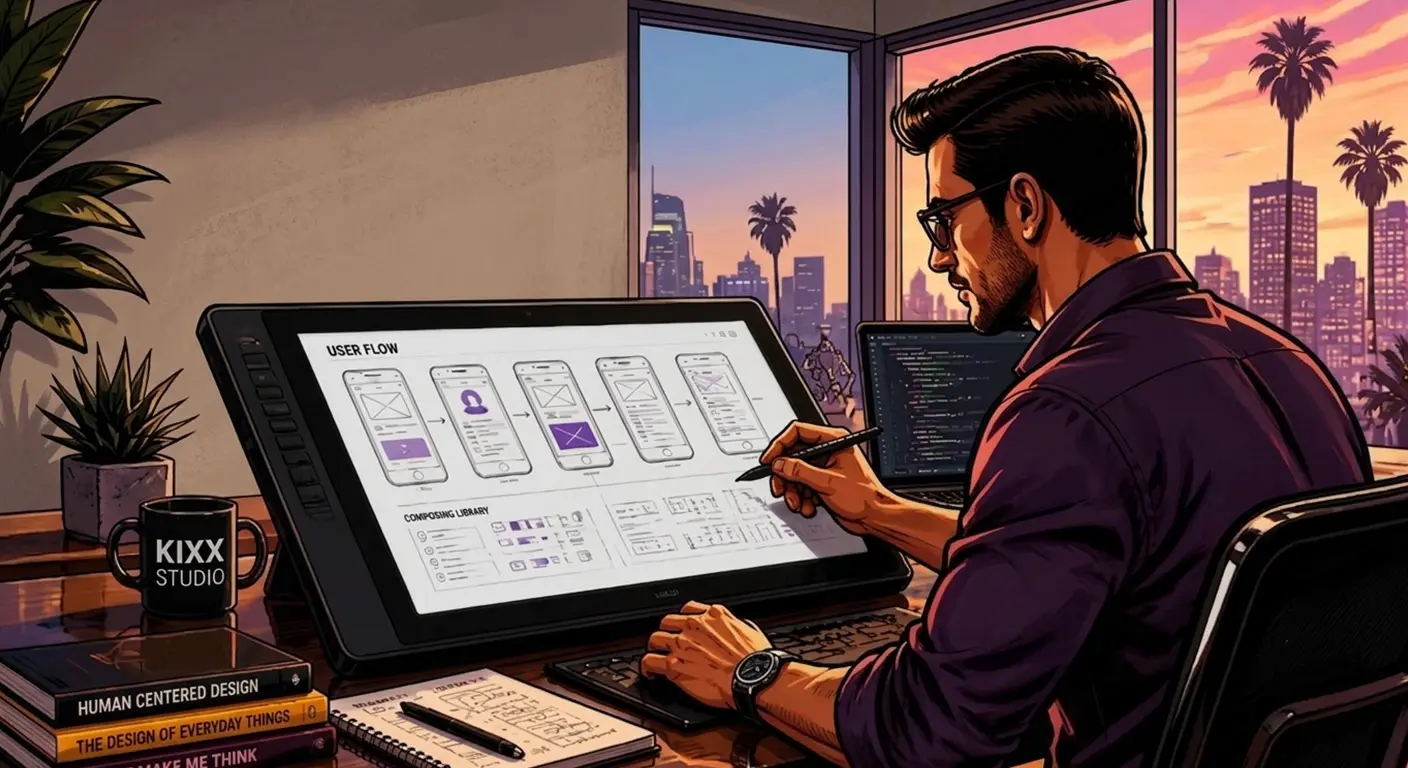
This is the part that surprises everyone, it is fundamentally wrong. The narrative surrounding the automation wave is deeply flawed. The truth is that AI is not killing designers; it is systematically executing the most boring, repetitive parts of the workflow. The pixel pushers who copy and paste generic dashboard templates are indeed facing a massive problem. But for strategic product architects who understand human psychology, structural storytelling, and complex user intents, this era marks the beginning of an incredible golden age.
The Great Shift from Pixel Creation to Strategic Direction
Here is something most people miss about the historical evolution of software tools. When automated layout generation tools first hit the consumer market years ago, people said the exact same thing about web developers. They claimed that customized software engineering would disappear overnight.
Instead, the market exploded with massive new engineering opportunities. The exact same transformation is happening inside the interface design landscape today. Automated generation engines are incredibly fast at spitting out thousands of generic color variations and component layouts.
However, an endless sheet of generated pixels does not equal a great digital product. A computer model creates things by analyzing historical datasets. It looks backward to construct an average representation of what already exists. It can create a standard box, but it cannot understand why a human needs to look inside that box in the first place.
The Death of the Clean Startup Vector to connect how automated design clutter accelerates the need for hyper-customized luxury branding systems.
The Machine Limitations: Why Algorithms Cannot Scale Empathy
Think of it this way. Imagine you are sitting across from a corporate client who is trying to launch a highly sensitive financial software platform for elderly users. The client thinks they want a complex, data-heavy dashboard packed with advanced technical analytical metrics.
As a professional human designer, you look at their raw consumer research data. You instantly realize that the target audience will feel deeply overwhelmed by that interface complexity. You understand their latent anxieties regarding financial security, digital literacy, and accessibility limits.
					+---------------------------------------------------------+
|             THE HUMAN DESIGN MONOPOLY                   |
+---------------------------------------------------------+
| Feature: Contextual Emotional Intuition                 |
| Human: Decodes hidden user anxieties and frustrations.  |
| Machine: Only replicates existing pattern densities.     |
| Winner: The Human-First Strategic Architect             |
+---------------------------------------------------------+
A generative system cannot execute this level of deep emotional translation. It does not feel frustration, it does not understand relief, and it cannot navigate contradictory human qualitative feedback. Because AI is not killing designers, our primary responsibility shifts from manually drawing vector shapes to acting as the ultimate empathetic gatekeepers of user experience.
Redefining the 2026 Product Design Toolkit
The modern professional designer no longer views generative systems as a terrifying existential threat. Instead, elite product creators treat these algorithmic engines as incredibly fast, automated interns.
Imagine you need to explore fifty different layout ideas for an intricate mobile checkout funnel. In the legacy workflow, this task would require days of tedious, repetitive manual component resizing. Today, you can deploy advanced generative algorithms to map out those foundational explorations within seconds.
Ahrefs Global UI/UX Employment Trends 2026 to provide authoritative external data proving that corporate demand for high-level design strategists is growing.
This rapid speed shifts the value metric away from pure execution mechanics. Your true value lies in your editorial taste, your systemic logic, and your capacity to curate the ultimate solution from an ocean of algorithmic options. You become an editor of visual systems rather than a manual pixel assembly line worker.
Why Complex Software Architectures Refuse to Be Automated
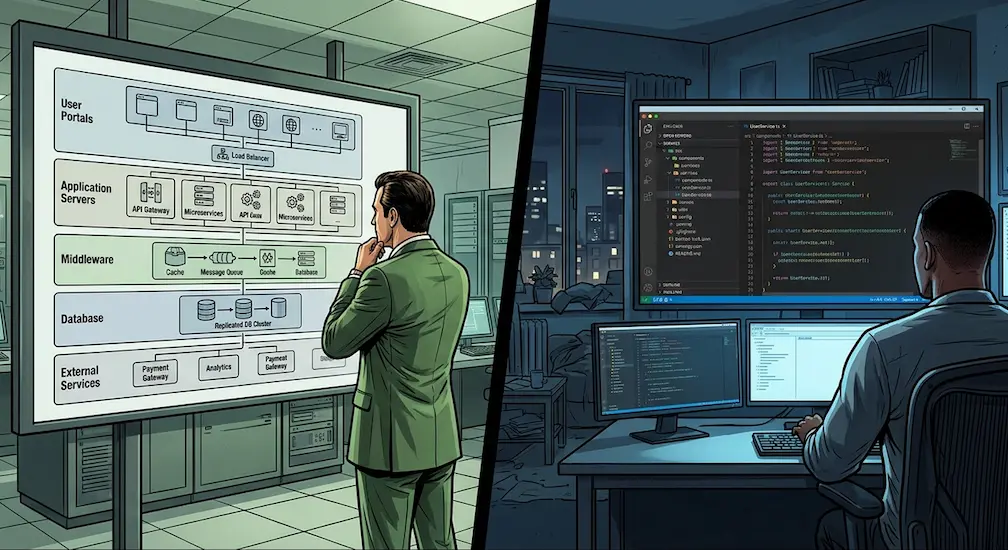
Let us look at enterprise-grade digital platforms. Building a high-performance business software tool involves managing extreme layout constraints and delicate data visualization pipelines.
Every single click, dropdown menu, and subtle micro-animation must cooperate perfectly to lower cognitive fatigue for the operator. If an interface component behaves unpredictably, an enterprise employee loses valuable work hours.
					+---------------------------------------------------------+
|           THE VALUE CHAIN SCALE 2026                    |
+---------------------------------------------------------+
| Manual Form Alignment  -> Machine Automation Territory  |
| Contextual User Flow   -> Shared Human-AI Collaboration |
| Systemic Architecture  -> Pure Human Strategy Domain    |
+---------------------------------------------------------+
Generative engines are notoriously terrible at managing these highly complex, multi-layered visual dependencies over long product lifecycles. They create isolated visual fragments that quickly break down when inserted into a massive, living enterprise design system. It takes a deeply analytical human brain to orchestrate consistency across thousands of dynamic application states.
The Rising Demand for Premium Human-Crafted Brand Identity
As the internet becomes completely flooded with cheap, auto-generated layouts, something fascinating is happening to consumer psychology. People are developing an instant, subconscious immunity to generic digital patterns.
When every low-tier software landing page uses the exact same layout grids, font spaces, and block combinations, they all begin to fade into a cloud of forgettable digital background noise. They lose their commercial leverage and struggle to build lasting trust.
This massive market saturation is driving a premium surge toward elite, highly bespoke, human-centered design systems. Progressive tech companies are intentionally investing premium capital into hyper-customized visual identities that feel incredibly distinctive, tactile, and curated. They know that authentic human expression is now the ultimate luxury asset in a world of endless machine duplication.
Shifting Focus to Cognitive Load Optimization
The ultimate playground for future product experts is the science of human brain optimization. As software platforms become deeper and inherit more data vectors, minimizing user fatigue becomes the core battleground for product retention.
A machine system can easily place a hundred data widgets on a clean screen layout. But it takes deep psychological analysis to know which eighty widgets should be completely hidden behind a protective layout layer to prevent user panic.
					+---------------------------------------------------------+
|           THE VALUE CHAIN SCALE 2026                    |
+---------------------------------------------------------+
| Manual Form Alignment  -> Machine Automation Territory  |
| Contextual User Flow   -> Shared Human-AI Collaboration |
| Systemic Architecture  -> Pure Human Strategy Domain    |
+---------------------------------------------------------+
This deliberate reduction of friction requires a master understanding of human behavioral patterns and attentional focus limits. When you approach a system from this analytical perspective, you realize why AI is not killing designers. It is highlighting our most essential skill set: the ability to make complex technology feel invisible, safe, and beautifully natural to operate.
Invisible AI UX: How to Integrate Copilots to show how humans build predictive interface architecture without causing layout clutter.]
The Master Orator of Digital Experiences
Think of the future elite designer as a master conductor of an orchestral symphony. The generative machine models are your individual instrumental players. They can play notes quickly, but they have no concept of the overall musical story arc.
You are the director who holds the master blueprint. You decide the timing, the rhythm, the heavy emotional hooks, and the moments of quiet stillness. You bring order to the underlying digital chaos.
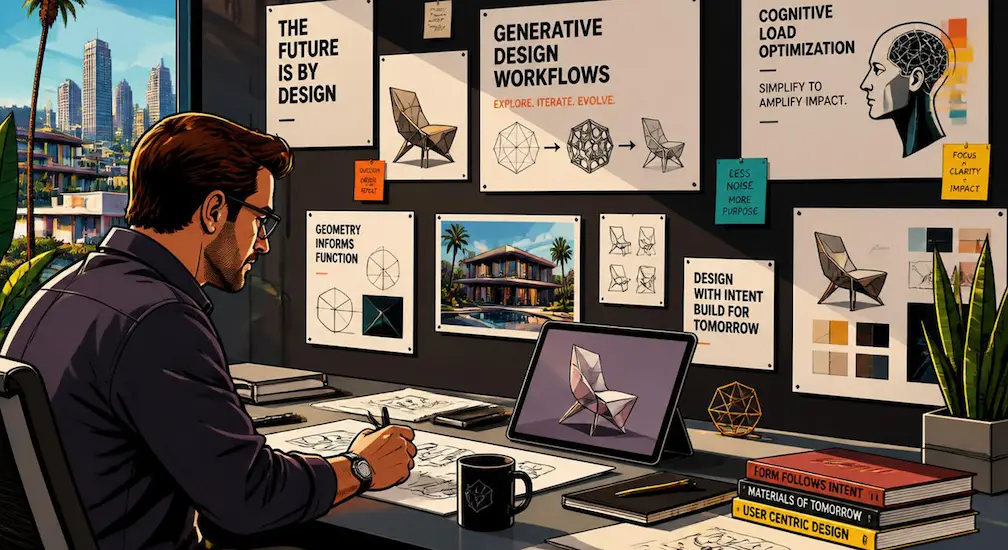
This elevated dynamic completely redefines creative fulfillment. We get to spend less time on tedious manual file organization and dramatically more time on creative vision, product strategy, and revolutionary interface mechanics. The machine is not our replacement, it is our ultimate power steering system.
Cultivating Aesthetic Intuition and Visual Restraint
The definitive signature of an elite creative architect is the deployment of absolute visual restraint. Automated software tools love to add unnecessary decorative fluff because they do not understand the elegance of silence.
A human master knows that sometimes the most powerful design statement is a completely blank space surrounding a single, breathtakingly crisp typographic variable. This level of aesthetic taste cannot be calculated by an algorithmic pattern spreadsheet.
It comes from years of consuming high-end architecture, classic fine art, elite cinematography, and studying real-world behavioral feedback loops. It is a deeply personal, human asset that lives within your creative intuition. Protect it, nurture it, and weaponize it to build visual monopolies that absolutely refuse to be ignored by the market.
Google Design Systems Research Index to ground our discussion in deep institutional studies on consumer interface accessibility and interaction speed limits.]
The Role of Embossing and Debossing
Embossing raises elements of the label off the surface. Debossing presses them in. Both techniques add a three-dimensional quality to a label that you simply cannot achieve with flat printing.
A debossed crest or embossed brand name is something a customer can feel with their fingertip. It says, “This brand paid attention to every single detail.” And when someone is about to spend thirty, fifty, or a hundred dollars on a bottle of whiskey, that kind of attention to detail matters enormously.
Conclusion: Embrace the Machine and Dominate the Field
The ultimate reality of the modern era is clear. AI is not killing designers; it is providing us with a massive opportunity to drop our manual tools and assume our true role as high-level visual engineers. The individuals who refuse to learn the systemic logic of automation will certainly find themselves left behind in the historical record.
But for those who step forward with a confident hustler’s smile, ready to merge human emotional intelligence with lightning-fast machine production speeds, the future is incredibly bright. We have the unique chance to build software ecosystems that feel deeply human, hyper-intuitive, and wildly profitable. The machine tools are officially loaded and waiting on your desktop. It is time to sit down, command the system, and design something magnificent.
What are your honest thoughts on the future of our industry? Are you currently utilizing automated layout engines to accelerate your studio output speed? Let us start a deep conversation in the comments area below, and share this insights piece with your product design squad!
Frequently Asked Questions
Why is AI not killing designers in the current tech ecosystem?
Machine models lack the essential capacity for emotional empathy, contextual strategic thinking, and qualitative human research. They excel at rapidly automating repetitive pixel production, which allows human creators to elevate their professional value by focusing exclusively on high-level system architecture, user psychology, and brand differentiation.
Can generative software systems create complete enterprise design applications?
No, generative software tools struggle heavily with long-term visual consistency and complex interactive user state management across massive application pipelines. They tend to produce isolated layout fragments that inevitably break when subjected to real-world software engineering constraints, edge-case variations, and continuous deployment cycles.
How does human-centered design improve a software company's valuation?
Human-centered design focuses directly on cognitive load optimization, which drastically lowers user activation friction and cuts customer churn down to a minimum. When a digital product feels exceptionally premium and intuitive to use, it drives strong natural user expansion revenue, translating directly into superior valuation multipliers during venture funding rounds.
What skill sets should UI/UX professionals focus on developing?
Designers must actively shift their attention away from basic production tasks and prioritize high-level skills like predictive workspace layouts, complex data visualization frameworks, cross-channel brand consistency, prompt engineering curation, and deep qualitative customer behavior analysis to ensure their lasting career relevance.
How can startups find a balance between automated tools and human designers?
Startups should aggressively deploy automated generative engines to execute rapid initial concept testing, high-volume visual brainstorming, and simple layout component assembly. However, they must retain elite human design architects to guide the ultimate product vision, ensure emotional brand alignment, and structure the final user architecture for maximum trust.